


Brain Test 4: Tricky Friends
4.62.58K Reviews
App Specs
- Version
- 1.36.0
- Updated On
- License
- Free
- Downloads
- 10,000,000+
- Developer
- Unico Studio
- Categories
- Trivia
- Platform
- Android, iOS
Screenshots
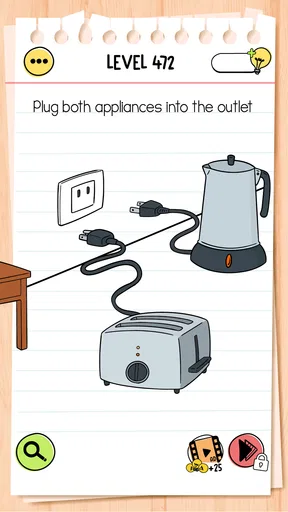
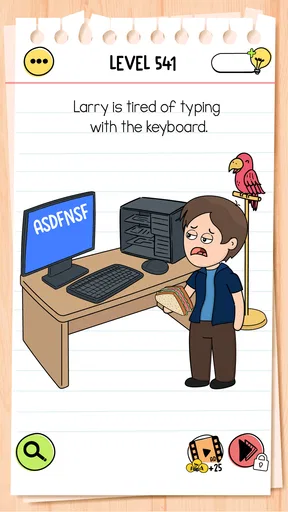
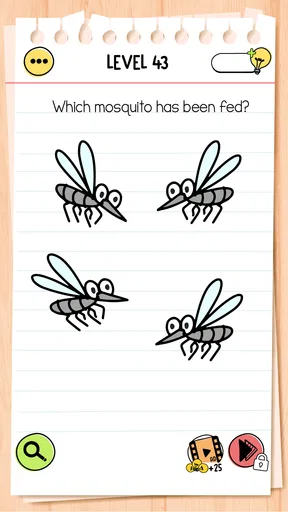
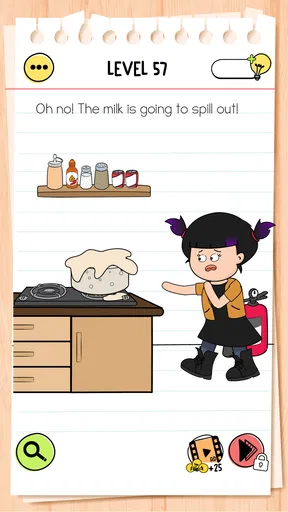

 Analysis by AppCompare
I find the best way to judge a mobile puzzle game is to try it in the gaps of a real day: a few minutes before an appointment, a quiet break, or a short ride when I want something more engaging than scrolling. Brain Test 4: Tricky Friends suits that kind of stop-and-start play. Its puzzles invite experimentation rather than long study, and the humor keeps a wrong guess from feeling like a serious setback. That makes it approachable, though it is not the right fit for everyone who enjoys brain teasers.
Readable scenes, simple entry
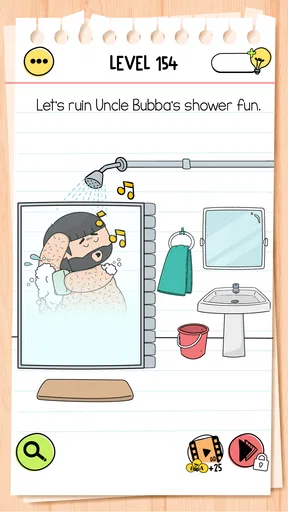
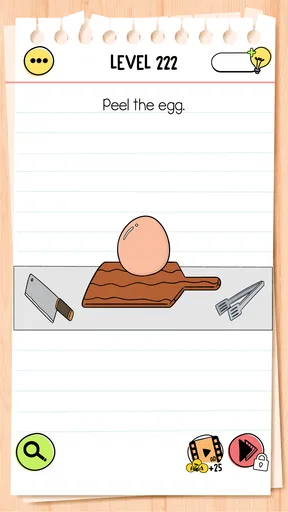
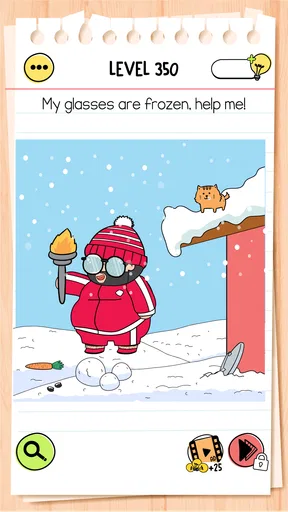
The game gets going without asking me to learn a complicated set of controls. I can focus on the puzzle in front of me, inspect the scene, and try an idea. That low-friction entry is useful for casual players and for anyone who would rather solve a visual riddle than navigate menus or manage a complicated campaign. The colorful presentation also helps separate characters and objects at a glance, so the central task is usually the thing I am thinking about, not how to operate the game.
Its scenes are playful rather than restrained, and that has a trade-off: a busy illustration can make it less obvious what matters. When a level seems impossible, I have better luck scanning the whole scene again than tapping the first object that looks important. I look for something out of place, an object that might be movable, or a character whose expression hints at the problem. This deliberate second look is a useful habit, but players who prefer clean, text-led questions may find visual clues less direct.
What the puzzles ask of you
As a trivia game, Brain Test 4 is an unusual alternative to quizzes built around recalling facts. It leans on lateral thinking, visual interpretation, and trying an unexpected action. That means a player who is not strong at general-knowledge quizzes can still enjoy it, while someone looking for a steady stream of factual questions may be disappointed. The appeal is less “Do I know the answer?” and more “What assumption is this puzzle trying to make me challenge?”
That difference also affects how I play with someone else. A short level can become a small conversation: one person suggests the obvious answer, another notices a detail, and both get a laugh when the solution turns out to be stranger than expected. I would use it as a casual shared activity, not as a serious test of intelligence or a way to compare people’s abilities. The puzzles reward a particular kind of playful lateral thinking; they do not measure anyone’s overall IQ.
Motor and sensory considerations
Most of the appeal comes from looking closely and interacting with illustrated scenes, so the game may be easier for people who are comfortable with visual detail and touch-based play. I would not choose it as a low-effort option for someone who has difficulty distinguishing small elements, interpreting colorful scenes, or making precise taps. The light tone does not remove those practical demands, and a puzzle can feel unfair if the important clue is hard for a player to perceive.
Sound adds to the cheerful mood, but it is not the only reason to play: the puzzle-solving itself is the main attraction. In a quiet public place, I can keep the experience low-key by turning the device’s sound down or off, if that suits the situation. For someone who relies on audio cues, I would be more cautious; the scenes and interactions are central, and I would not assume that sound alone communicates what a level requires.
Worth Reading Before You Choose

Flipboard Shows What News Apps Must Do Beyond the Feed

Switching to Android Auto Means Rethinking Your Driving Routine

Google Calendar Makes a Crowded Week Easier to Manage

Ludo King Makes the Most of the Minutes Between Plans

Baby Panda World Brings Quick Play to Modern Phones, but Its Game Library Feels Busy

ESPN’s Live Game View Makes Following Close Games Easier
Fitting it into an ordinary day
For a realistic use case, imagine waiting for a delayed appointment with only a few spare minutes. I can open the game, work on a puzzle, and put it aside when I am called without needing to remember a long story thread. That short-session quality is a strength for casual play. It is less suitable when I need something that can be paused at any instant without losing concentration: a tricky level can leave me turning the idea over in my head after I have put the phone away.
It is also a better choice for a brief mental detour than for every kind of waiting situation. On a crowded commute, divided attention can make visual puzzles frustrating, especially if I need to watch my surroundings. In that setting, an audio-first game or a simple word quiz may be easier to manage. At home, by contrast, the oddball scenes give me room to inspect details and try a couple of approaches without feeling rushed.
Mind-Bending Puzzles
From the get-go, Brain Test 4: Tricky Friends throws you into a whirlwind of quirky puzzles. Each level is a new adventure, packed with unexpected twists and turns. The developers have done an incredible job at keeping things fresh and unpredictable. One minute you're solving a math problem, and the next, you're figuring out how to help a cat cross a river. It’s like a mental rollercoaster, and honestly, I couldn’t get enough!
Meet the Tricky Friends
The game introduces you to a bunch of lovable characters, each with their own unique quirks. These "Tricky Friends" add a layer of charm and humor to the game. They're not just there for company; they actively participate in the puzzles, making the experience feel interactive and engaging. You might find yourself chuckling at their antics, which adds a delightful twist to the brain-busting tasks.
Isn’t it refreshing when a game doesn’t take itself too seriously? The light-hearted vibe is a big part of what makes this app stand out.
Easy to Pick Up, Hard to Put Down
One of the things I love about this app is its user-friendly interface. It’s designed to be intuitive, so you can dive right into the fun without a steep learning curve. However, don’t let the simplicity fool you. The puzzles ramp up in difficulty, testing your logic, creativity, and sometimes just plain old patience! You’ll find yourself muttering, "I can figure this out!" as you tackle each new challenge. It’s addictive, in the best way possible.
Plus, the hint system is a lifesaver when you’re really stumped. It gives you just enough of a nudge to get back on track without spoiling the fun.
A Visual Treat
Visually, the game is a treat. The art style is colorful and vibrant, with a playful aesthetic that matches the game’s tone perfectly. The animations are smooth, and the attention to detail in the character designs adds an extra layer of polish. It’s clear the developers put a lot of love into creating this quirky world.
Moreover, the sound effects and background music are cheerful and upbeat, complementing the visual experience beautifully. You might even find yourself humming along as you tackle the next head-scratcher.
Who I’d Recommend It To
I would recommend this to someone who likes quick, surprising puzzles, enjoys cartoon characters, and does not mind experimenting with an answer that seems silly at first. It is also a friendly pick for a family member who wants a light game to share in short bursts; the Everyone age rating makes it broadly suitable, though younger players may still appreciate an adult nearby when a riddle becomes frustrating. Unico Studio is the developer, and the game is free to start, which makes trying its style an easy decision.
There are a few practical questions worth considering before installing. It is listed for Android 6.0 and later, and the current version is 1.27.0. The game has a 4.7 average from around 186,000 ratings, with over 10 million installs and roughly 2,400 written reviews. Those figures suggest it has found a large audience, but they do not guarantee that its humor or puzzle logic will suit you personally.
Hints, patience, and spending choices
The hint system is most useful when I have genuinely explored the scene and still cannot see the intended twist. I try not to reach for it the moment I get stuck: first I restate the puzzle in plain language, then check whether I am assuming that an object can only be used in its obvious way. This keeps the solution satisfying and makes hints feel like a nudge rather than a substitute for playing. If I am tired or short on time, though, using a hint can be a sensible way to avoid turning a casual break into an irritating stalemate.
The game includes optional in-app purchases, with items priced from $0.99 to $24.99. I would treat the free entry point as a chance to see whether the puzzle style clicks before spending anything. If you are shopping for a game with no in-app purchases at all, this is not the safest assumption; check the purchase options on your device and decide in advance whether you want to spend. For parents, that is a more useful precaution than assuming a playful presentation automatically means a purchase-free experience.
Where it can frustrate
The main weakness is that a clever trick can sometimes feel less like a deduction and more like guessing what the designer had in mind. When several objects appear equally plausible, repeatedly trying actions can interrupt the rhythm. I find it helps to pause before tapping: identify the goal, note the unusual detail, and test one idea at a time. That simple approach makes the puzzle easier to reason through and helps me tell whether I am solving it or just prodding the screen.
Difficulty is personal, too. Someone who enjoys playful misdirection may see a surprising solution as the point, while someone who wants rules that are always explicit may call the same moment arbitrary. If you prefer crossword-style clues, factual trivia, or puzzles with one clearly stated set of rules, a conventional quiz or word game is likely a better match. Brain Test 4 is strongest when you are willing to entertain an odd possibility and laugh when your first sensible answer fails.
A welcoming game, with real limits
For me, the inclusive appeal is its approachable tone and easy starting point, not a promise that every puzzle will work equally well for every player. Visual inspection and touch interaction remain important, so people who find those demanding may be better served by a text-based quiz, an audio-led game, or a puzzle with adjustable presentation. I also would not use it as a substitute for a formal brain assessment: it is entertainment built around playful problem-solving, not a diagnostic tool.
Brain Test 4: Tricky Friends was released on February 9, 2023, and its broad audience and light approach make it a convenient option when I want a little mental mischief rather than a long, serious challenge. I would skip it if I needed a predictable factual quiz, a fully hands-free activity, or puzzles that never rely on visual details and trial-and-error. But if you enjoy cartoon scenes, unconventional answers, and short sessions that can turn into a shared laugh, I think it is worth trying. In conclusion, Brain Test 4: Tricky Friends is more than just a game; it’s an experience. Whether you’re a puzzle aficionado or just looking for something fun to pass the time, this app is a must-try. So go ahead, give your brain a treat, and dive into the world of tricky friends. Who knows, you might just discover a new favorite pastime!
Pros
- Engaging puzzles keep your mind sharp.
- Colorful graphics enhance user experience.
- Frequent updates with new levels.
- Intuitive controls suitable for all ages.
- Offline mode available for gameplay.
Cons
- Some puzzles feel repetitive over time.
- Ads can be intrusive between levels.
- Limited hints can frustrate players.
- In-app purchases are a bit pricey.
- No multiplayer or social features.
FAQs for Brain Test 4: Tricky Friends
What is Brain Test 4: Tricky Friends?
Brain Test 4: Tricky Friends is a puzzle game designed to challenge your mind with a variety of tricky and thought-provoking questions. The game includes numerous levels, each requiring creative thinking and problem-solving skills. It's designed to be fun and engaging, making it a great choice for those who love puzzles.
Is Brain Test 4: Tricky Friends suitable for all ages?
Yes, Brain Test 4: Tricky Friends is suitable for players of all ages. The puzzles are designed to be challenging yet accessible, providing a fun and educational experience for both children and adults. However, younger players might need some assistance with the more complex puzzles.
Does Brain Test 4: Tricky Friends require an internet connection?
No, Brain Test 4: Tricky Friends can be played offline. This makes it a convenient option for users who want to enjoy the game without worrying about data usage or internet connectivity. However, some features, like updates, might require an internet connection.
Are there in-app purchases in Brain Test 4: Tricky Friends?
Yes, Brain Test 4: Tricky Friends offers in-app purchases. These can enhance your gaming experience by providing hints or unlocking additional content. While the game is free to play, these optional purchases can help if you get stuck on particularly challenging puzzles.
What platforms is Brain Test 4: Tricky Friends available on?
Brain Test 4: Tricky Friends is available on both Android and iOS platforms. You can download it from the Google Play Store for Android devices and the Apple App Store for iOS devices. It’s optimized for a wide range of smartphones and tablets, ensuring a smooth gaming experience.


